
A Fly on the Wall

We see photographs every day, and most of them get a quick swipe before we move on. We rarely stop to think about what one actually holds: a moment in time, and the emotion that comes with it. So what happens when a photographer chooses to look at that moment more slowly?
Lum Hajrullahu is a young photographer based in Pristina, Kosovo. Still in his studies, he already has a wide range of work, some of it deeply emotional. What stands out in his answers is how much thought sits behind a single frame.

He starts with responsibility. "It feels somewhat like a responsibility," he says. "I've thought quite a lot about how my photography portrays my city, my culture, and my people. I feel it's the photographer's responsibility, through what he decides to capture and what he leaves out, to tell the viewer the story." How much this matters depends on the kind of photographer you are.
For someone chasing the beauty or the chaos of a city, "portrayal does matter." For a documentary photographer, it depends on what is being documented and how it shapes the story.

His way of working begins with disappearing. "I see myself as a fly on the wall. I try not to be present in the moment at all, in any way possible. That 'unpresence' leads to the final shot." In his view, the picture arrives once he is out of its way.

What inspires him is tied to how we consume images today. "Today we like to see 'fast media' (reels, videos), while back then photography was the only means by which you could receive information about an ongoing event." A photograph, he explains, is static and also not static. "It doesn't move like a video, yet the more you look at it, the more you feel like it's moving and you've seen that moment with your own eyes, as if you were there."
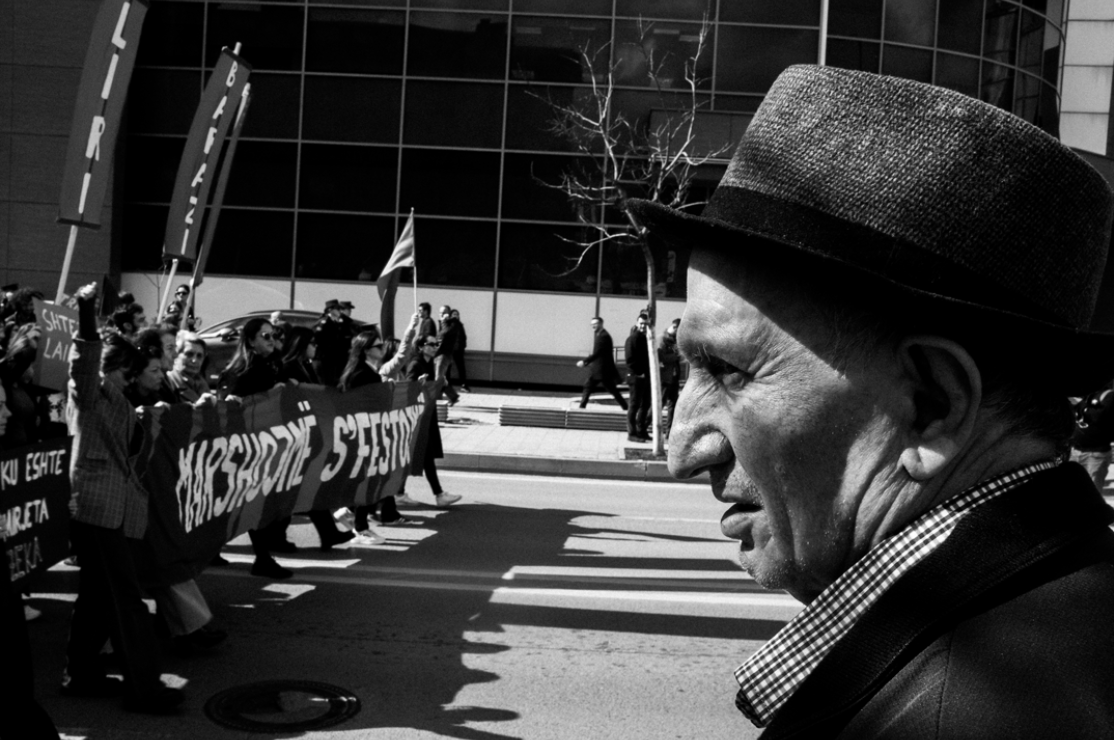
Most of his work is digital, with analog showing up from time to time, and film has clearly shaped how he thinks. "One thing I really love about analog is that it teaches you a whole other philosophy of photography. It teaches you to think more before shooting, to look towards capturing the right moment, and to think more about composition."
All three lessons happen before the shutter clicks, which fits the fly on the wall idea: more looking, less reacting. At a time when a phone can take a hundred frames in a minute, he values the habit of slowing down and choosing.

The most interesting answer came when we asked how he makes sure a viewer feels the emotion he captured. He doesn't try to. "I don't want to make sure someone feels the same emotion that is in the picture or that I was feeling. I want the viewer to have their own emotion."
A single photograph might take someone back to something that happened to them, to their own feelings and nostalgia. He enjoys hearing what people felt when they saw his work. "It's beautiful to see the contrast in all of it."
Not every shoot goes smoothly. His biggest struggle is venues with poor lighting, especially private events, where the low light can leave photos grainy. "It's somehow on me, but also on them."

Then there are the shoots where everything works. "One of my favorite things to do as a photographer is photograph concerts," he says, and one of them stays with him: the Milksnatchers performance at Sunny Hill Festival. "I really knew I would capture exactly what I wanted to capture. It was also quite emotional for me, since they are my favorite local band and also good friends of mine. I knew it was perfect."

When we ask about his ritual, the answer is three words: "Coffee and cigarettes." Nothing about it is staged or precious, which suits a photographer who prefers to let the moment happen without him.

For anyone who wants to get into documentary photography, he recommends Josef Koudelka. "He is one of the biggest inspirations I've ever had. Just seeing his work was like having someone teach me photography."

Looking ahead, Hajrullahu wants to keep working as a photojournalist and continue his artistic practice as a documentary photographer. He hopes to take part in photography festivals and to expand his work beyond borders, capturing as much of the world as he can through his lens.
Written by Renea Sanaja


Comments