
BUSHIDŌ NEVER EXISTED (THE WAY YOU THINK IT DID)
Updated: Jul 8
The myth that outlived the samurai and the story we keep polishing.
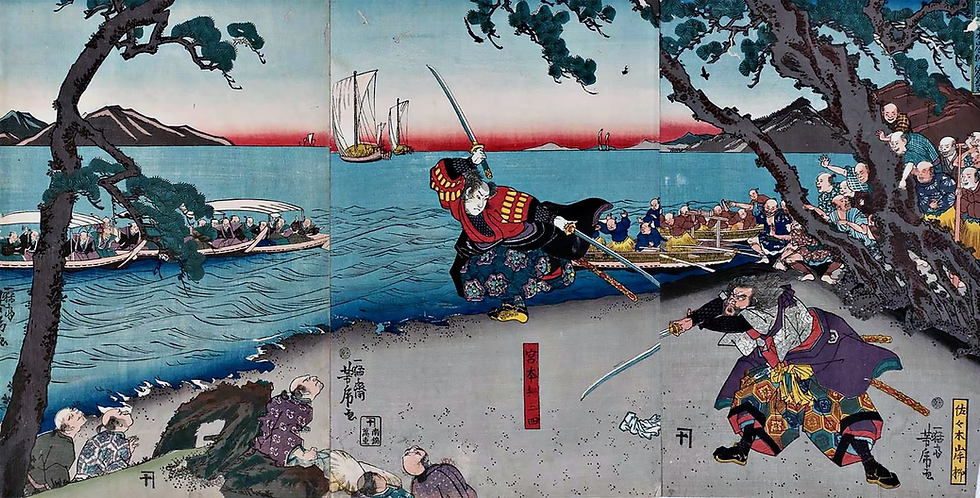
Every generation inherits a story. Some get it from textbooks, some from film, some from museums or from carefully curated history. But most of us inherit it without ever realizing it was edited along the way.
Stories don't announce when they change. They just keep going- cleaner, smoother, more dramatic with every retelling. Bushidō might be the most polished story we've ever taken as fact.
We picture it as a rigid code that defined the samurai from day one: honor, loyalty, discipline, courage. A moral system so deep it ran in the blood. But the moment you actually start digging into history, that picture starts to blur.
WE PREFER HISTORY WHEN IT FEELS CLEAN
Bushidō feels believable because it feels structured. It gives us something we crave: order in a past that was actually chaotic. A code implies a system - a rulebook, a shared understanding of right and wrong among warriors. That's a comforting thought. But history doesn't behave like that.
Across different eras and regions of Japan, Bushidō doesn't appear as one unified
philosophy. What you actually find are fragmented practices, shifting ethics, and evolving ideas of conduct shaped by survival, politics, and whoever was in power at the time.
What we now call Bushidō is better understood as a later construction, an attempt to unify diverse and sometimes contradictory behaviors into a single readable narrative.


LOYALTY WAS NEVER ABSOLUTE
One of the biggest myths attached to Bushidō is the idea of unwavering loyalty:
One master, one life, no questions asked. It sounds cinematic, but it's also not really how it worked.
Feudal Japan was politically unstable for long stretches. Alliances shifted. Clans broke apart and rebuilt. Staying alive often meant reading the room and adapting rather than dying for a lost cause. Loyalty existed, but it was conditional, strategic, and shaped by circumstance.
The version we've inherited, the ‘pure-devotion-until-death’ type, is a simplification that came much later.

THE MISUNDERSTOOD IDEA OF DEATH
You've probably heard it:
"The Way of the Samurai is found in death."
Most people read it as a romantic call to sacrifice: a warrior always ready to lay down his life. That isn't really what it means in context.
It's closer to a psychological practice than a literal instruction. An awareness of mortality. A way of staying sharp. Because war doesn't reward idealism - it rewards timing, calculation, and composure. The samurai wasn't rushing toward death. He was constantly negotiating with it.
THE WARRIOR WHO STOPPED FIGHTING… BUT NEVER STOPPED MATTERING
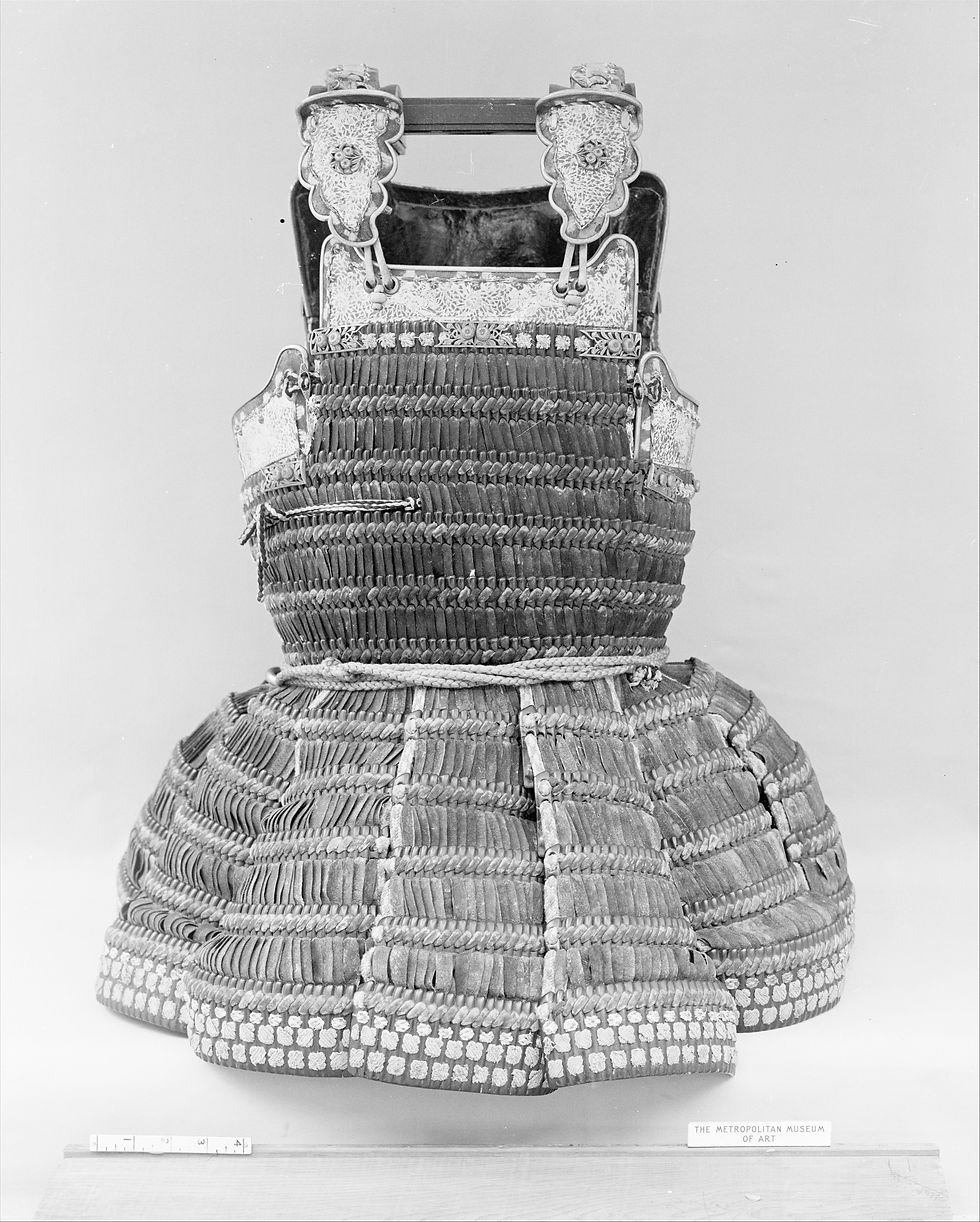
By the Edo period, large-scale warfare in Japan had largely dried up. The samurai
transitioned from battlefields into bureaucratic and administrative roles. Their swords collected dust, yet their identity didn't disappear. Something unusual happened. The warrior class stopped fighting wars, but the idea of the warrior became more important than ever. Bushidō shifted from a code of combat into a framework of identity. It preserved the warrior image long after the conditions for war had changed. That's a rare cultural move, mythology stepping in to fill the space that reality left behind.

Hokusai's Great Wave, from his "Thirty-Six Views of Mount Fuji" series. Created
during the same Edo period in which samurai had long stopped being battlefield warriors, yet Japanese art was at its most powerful. Culture outlasts conflict.
BUSHIDŌ WAS BUILT IN HINDSIGHT
The version of Bushidō most people know today isn't a direct line back to ancient samurai tradition. It's a reconstruction, assembled during Japan's modernization era, when fragmented practices and philosophies were pulled together, reorganized, and repackaged into a single national story.
What was once diverse, sometimes contradictory, and often pragmatic got standardized into something clean and symbolic.
It became less about how samurai actually lived and more about how a nation chose to remember them. That's not history - that's branding.

Dignitaries of early Meiji Japan, 1877 woodblock print by Yamazaki Toshinobu. By
this point, the samurai class had been dissolved, but the mythology surrounding them was only just getting started.


![Katana with scabbard and hilt, Edo period - British Museum, London]](https://static.wixstatic.com/media/824353_f0d126a111c24a1ba2088c84f6047e9b~mv2.jpg/v1/fill/w_980,h_318,al_c,q_80,usm_0.66_1.00_0.01,enc_avif,quality_auto/824353_f0d126a111c24a1ba2088c84f6047e9b~mv2.jpg)
THE SWORD WAS NEVER THE WHOLE STORY
The katana is everywhere - in film, streetwear, tattoos, gaming. It's become shorthand for samurai identity. But historically, warfare in Japan depended far more on spears, bows, formations, and battlefield strategy than on swords. The katana's dominance in popular imagination is a post-war mythology of its own. The sword gained symbolic power precisely when its practical dominance had already faded.
It survived war and was transformed into something else entirely. That's the thing about symbols: they outlast their original function and pick up new meaning along the way.
WHAT ARE WE STILL CALLING HISTORY?
Across centuries, Bushidō moves between philosophy, survival logic, political identity, and cultural branding. Each generation strips away a little more complexity and replaces it with clarity, and that clarity is exactly what makes it more powerful as a myth than it ever was as a lived system.
The real question isn't whether the samurai followed a perfect code. The real question is sharper than that:
What else are we still treating as history that's actually a story we keep editing to make it feel more true?
by Gashya Gupta
Continue the journey!
Related events:


Social media: Japanese history Instagram:
Kenjutsu Instagram:


For readers interested in network administration, the details surrounding Three Router Login provide a useful starting point. Router settings can affect everyday connectivity, so understanding basic access is valuable. I found this article helpful because it discusses the topic in an approachable way rather than assuming advanced networking knowledge.
Found this while looking for quick browser games. The eggy car online version runs smoothly and is fun for short breaks.